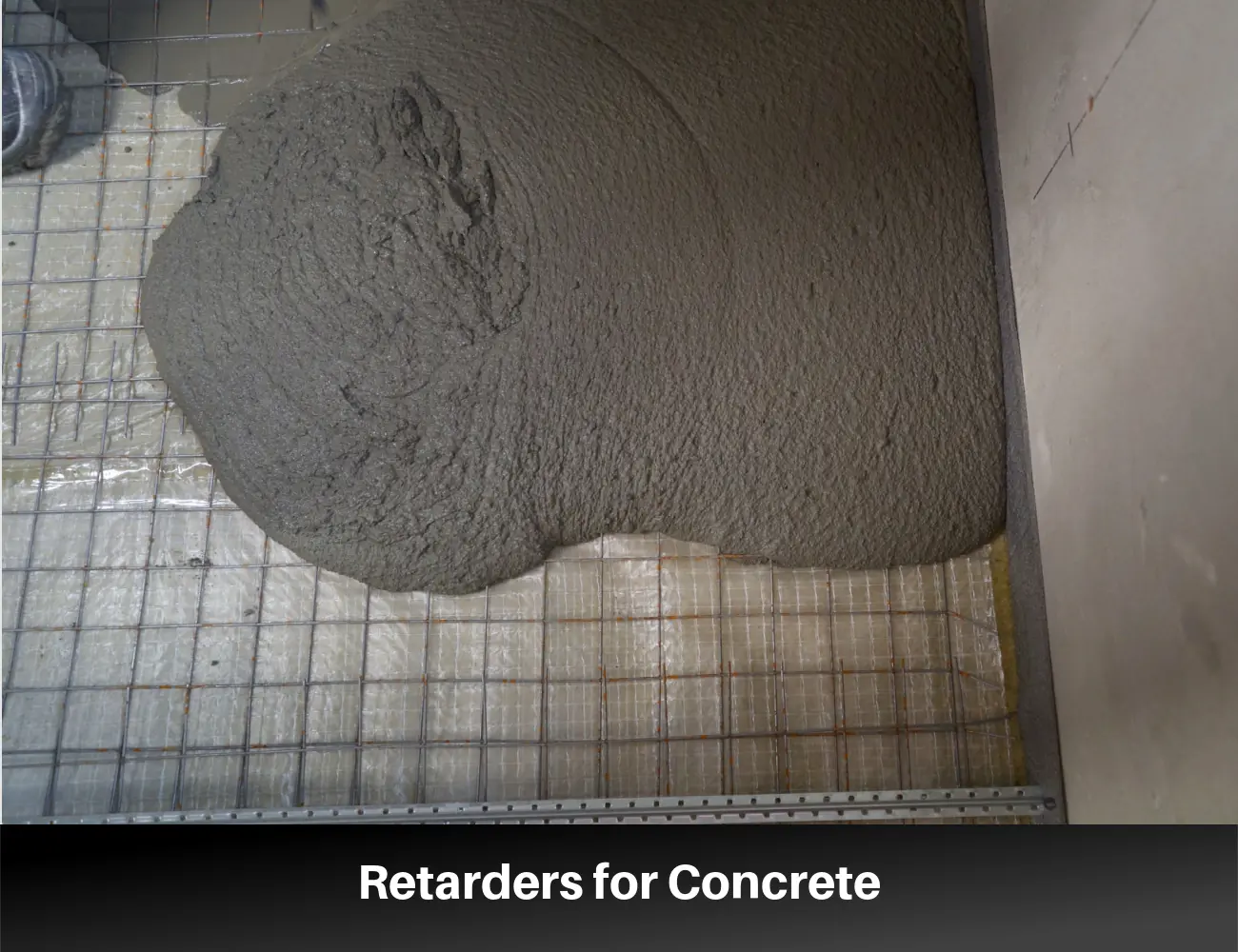
<p>Setting time is a schedule as well as a chemical event, and hot weather or long pours can push it out of control. A retarder buys working time, but dosage and conditions decide whether the result is helpful or harmful.</p> <p>Experts categorize retarders to concrete into two main groups: organic retarders and chemical retarders, though these classifications are not as distinct as they may seem as some retarders contain both chemical and organic compounds.</p> <p>All the distinct types of concrete retarders work by influencing the chemical reaction between cement and water, known as hydration. Yet, the specific mechanism for influencing hydration depends on the type of retarder.</p> <p>Retarders have several beneficial effects on concrete, which give them more flexibility over their construction timelines. It is vital to study the exact type and amount of retarder necessary for the job and type of concrete as the wrong kind or amount can have adverse effects on concrete.</p> <p>Extended workability is the main reason that most builders use concrete retarders. By slowing down the setting time, builders have a longer timeline to handle, place, and finish concrete. This effect is particularly beneficial when there is a long transport distance, complex formwork, or intricate construction processes.</p>
Types of Retarders for Concrete
Organic Concrete Retarders
Chemical Concrete Retarders
How Do Concrete Retarders Work?
Effects of Retarders on Concrete Qualities
Extended Workability
Reduced Risk of Cracks
Retarders help reduce the risk of cracks appearing because they slow down hydration and heat generation. This controlled rise in temperature helps to minimize the potential for thermal cracking. This is particularly helpful in large concrete applications. Improper amounts of retarders can increase the risk of cracking and shrinking, so it is vital to follow expert advice for retarder amounts.
Enhanced Strength
Retarders help to increase the bond strength between existing and new concrete by extending the workability and allowing for increased interlocking between the aggregate particles. Retarders also increase the compressive strength of concrete mixed with retarders. It is important to the optimal strength development of concrete to use the correct type and amount of concrete retarder.
Bleeding
Retarders can impact the bleeding of concrete in different ways. Some retarders will reduce concrete bleeding and others will have the opposite effect. Retarders delay setting, allowing more time for water to rise to the surface of the concrete. Yet some retarders help the concrete mixture to retain more water to reduce the amount that will bleed to the surface.
Cohesion
Retarders also impact the cohesion of concrete in diverse ways. In some cases, the extended workability that retarders create will allow for better particle interaction and dispersion in cementitious material, aggregates, and other components. This can increase homogeneity within the overall mixture. Yet some retarders increase the water content which can decrease cohesion.
Concrete Applications That Benefit from the Use of Retarders
The use of concrete retarders specifically benefits certain concrete applications.
Incorporating Retarders into a Concrete Mixture
Builders incorporate retarders into concrete during the mixing stage, but the specific method depends on the type of retarder and the form in which they are supplied either powder, liquid, or admixture. Here are the general steps for incorporating retarders into concrete.