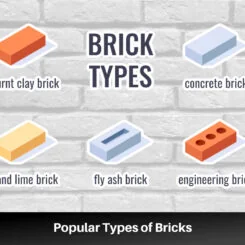
<p>Weight per volume sounds like a footnote until a wall, a lintel or a shipping pallet depends on it. Density also tracks with porosity, which links the figure to how a brick performs in service.</p> <p>Bricks vary widely by the material composition and the manufacturing process. Thus, bricks made from clay, concrete, soil, fly ash, and shale all vary in density. The density of a particular type of brick is a vital consideration in the building process.</p> <p>Brick density is a characteristic that affects a brick’s strength, durability, and thermal properties. Engineers and architects regularly consider the density of a particular type of brick to determine if it will work for the type of building or structure they want to create.</p> <p>Brick density is a vital consideration in determining the load-bearing capacity of a building or structure. Architects and engineers calculate the density of the weight of abrick typeto determine the structural integrity of walls, columns, and other components. By considering the density of a particular type of brick, they can ensure that it will withstand the forces and load to which it is subjected.</p>
Why is the Density of a Brick Important in Design?
Structural Design
Construction Planning
Brick density affects the weight of brick and the cost of installation. Heavier bricks require stronger foundations as well as take more time to move and install. Particularly heavy bricks may require specialized equipment to handle the weight. Building professionals consider brick density, among many factors, to plan out logistics and transportation and to calculate costs and ensure the safe and efficient use of materials on site.
Thermal and Sound Performance
Brick density affects the insulation of the building or structure. In general, bricks with higher density help to block noise transfer between structures. This is an essential calculation in buildings where people live near one another in the same space.
The density of bricks is also a vital consideration in thermal performance. Bricks with high densities have a higher rate of thermal conductivity but may not increase thermal insulation. Often bricks with lower densities offer better insulation if there is the presence of air pockets of extra additives to increase the insulation capabilities.
Durability and Longevity
Brick density affects the overall durability and longevity of a building. Higher-density bricks create more robust structures that tend to resist weathering, moisture, fire, and physical damage better than those with low-density bricks.
Compliance with Regulations
Building codes and requirements will often specify a particular brick density for specific types of buildings and structures. Builders must comply with these regulations to meet safety standards, pass inspections, and create a safe building that can withstand external forces.
Brick Density Chart
These numbers represent standard ranges, but be sure to check with specific brick manufacturers as these numbers can differ according to production techniques.
What are the Bricks with the Highest and Lowest Densities?
The bricks with the highest densities are specifically designed brick products. Engineering bricks, like the Accrington bricks used to build the Empire State Building, are specialized bricks that were developed for strength and moisture and acid resistance. These bricks have a high-density range from 2,000 kg/m³ to 2,400 kg/m³. But the highest-density bricks arerefractory bricks. These are bricks that are engineered to withstand high temperatures, wide temperature fluctuations, and chemical corrosion. They have a density range from 2,800 kg/m³ to 3,500 kg/m³.
Lightweight bricks have the lowest density by design. Engineers use these bricks, of which ACCs are one, when they want to create a building or structure where weight reduction is vital. Many of these bricks also have superior thermal insulation due to the presence of air bubbles that slow the transfer of heat.