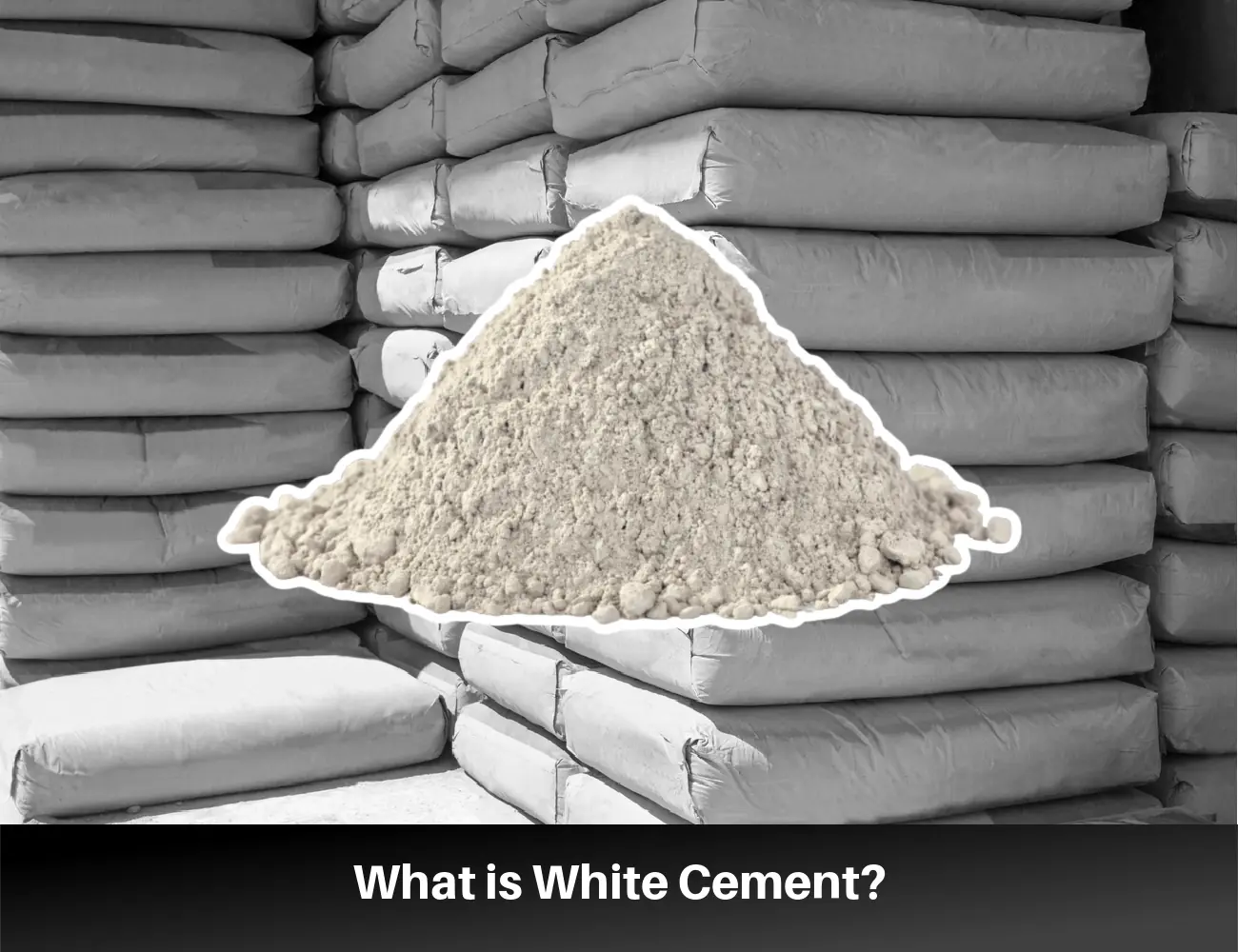
<p>Colour is the obvious reason to choose a white binder, and it is not the only one. The manufacturing route changes the material's behaviour as well, which affects where it makes sense to specify.</p> <p>White cement is distinguished from regular cement because of its white color. This color is achieved through the careful selection of raw materials. These raw materials have a low iron and manganese content, such as limestone, chalk, kaolin clay, and silica. The manufacturers carefully select the materials and screen for impurities that can cause discoloration.</p> <p>After the selection of raw materials, they are ground and then blended to achieve the correct proportions. The dust is fed into a kiln and heated to produce theclinker. These are ground into fine dust. Even with the controlled raw materials, many cement producers must mix additives and dyes to the powder to achieve the brightness they desire.</p> <p>There are no universal guidelines for ranking white cement qualities, but manufacturers may denote specific qualities using some or all of these criteria.</p>
What is White Cement?
Qualities of White Cement
Types of White Cement
Not all white cement has a standard system of ranking system like white Portland cement which ranks in terms of Types I-V. Instead, manufacturers rank white cement in terms of application, performance characteristics, and specific attributes.
General Purpose White Cement
This cement is useful for a wide range of applications from decorative to practical. It has the essential qualities of white cement such as a white color, adequate compressive strength, easy workability, an average setting time, and long-term durability.
High Early Strength White Cement
High Early Strength White Cement is a type of cement that has an accelerated strength development compared to standard white cement. Cement companies create this cement for a faster setting time and early strength gain where rapid construction is necessary.
White Cement Tile Grout
This white cement is specifically fabricated for tile grout applications to ensure good cohesion, workability, and durability. It fills the gaps between tiles and provides a smooth, white finish.
Waterproof/Water Resistant White Cement
Cement fabricators mix in additives like acrylic or latex to increase the water resistance of white cement. Builders use this type of cement in water-exposed environments where aesthetics are still important like swimming pools, fountains, and water tanks.
There are also varieties of water-resistant white Portland cement. These are sulfate resistant, so they are useful in applications that are exposed to seawater and soil with groundwater with high levels of sulfates.
Specialized Decorative White Cement
Cement manufacturers create specialized white cement products for distinct applications. These include white cement with enhanced brightness, improved color consistency, and smooth or textured surface finish.
Uses of White Cement
White cement has a wide range of uses from the construction industry to the arts.
White Cement Compared to Gray Cement
White and gray cement are similar in strength and workability, but white cement has certain properties that make it more or less useful in certain applications.