<p>Finishing decisions outlast every other choice on a slab, because the surface is what people touch and see. Each technique offers a distinct look with a matching set of maintenance and failure modes.</p> <p>There are so many concrete finish options available, the key is selecting the right one for the project. This is where understanding the advantages and disadvantages of each type is essential.</p> <p>A smooth trowel finish involves builders using a trowel, which is a steel blade, to create a smooth and glossy finish on the concrete.</p> <p>Broom-finished concrete floors are a popular option. For this surface, builders create a textured surface by using a broom to create small grooves on the face of the concrete.</p> <p>This finish exposes the aggregates, such as pebbles or stones, by removing the top layer of cement to create a varied and textured surface.</p> <p>Stamped concrete is imprinted with decorative patterns or textures so that it resembles other materials like slate, wood, or bricks.</p> <p>This finish involves placing salt crystals into freshly poured concrete and then washing them away once the concrete has cured.</p>
Concrete Finishes and Their Pros and Cons
Smooth Trowel Finish
Broom Finish
Exposed Aggregate Finish
Stamped Concrete Finish
Salt Concrete Finish
Integral Color Concrete Finish
For integral color finishes, contractors add dye or pigments to the concrete mix, so that there is color throughout the entire mixture.
Polished Concrete Finish
Polished concrete finishes require grinding and polishing the concrete to create a smooth surface.
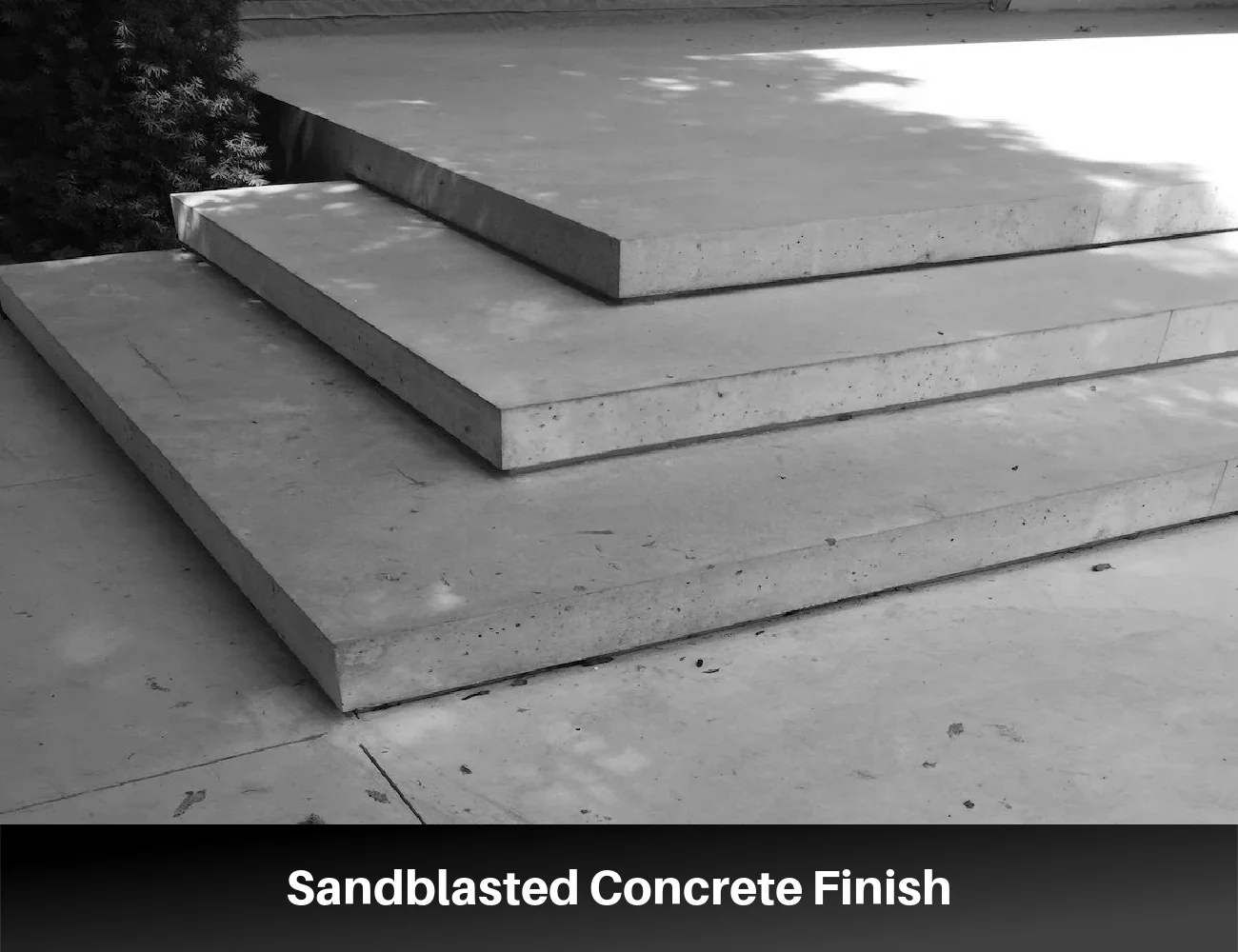
Sandblasted Concrete Finish
Contractors create sandblasted concrete finishes using high-powered air or sand or other abrasive material to create a rough textured look.