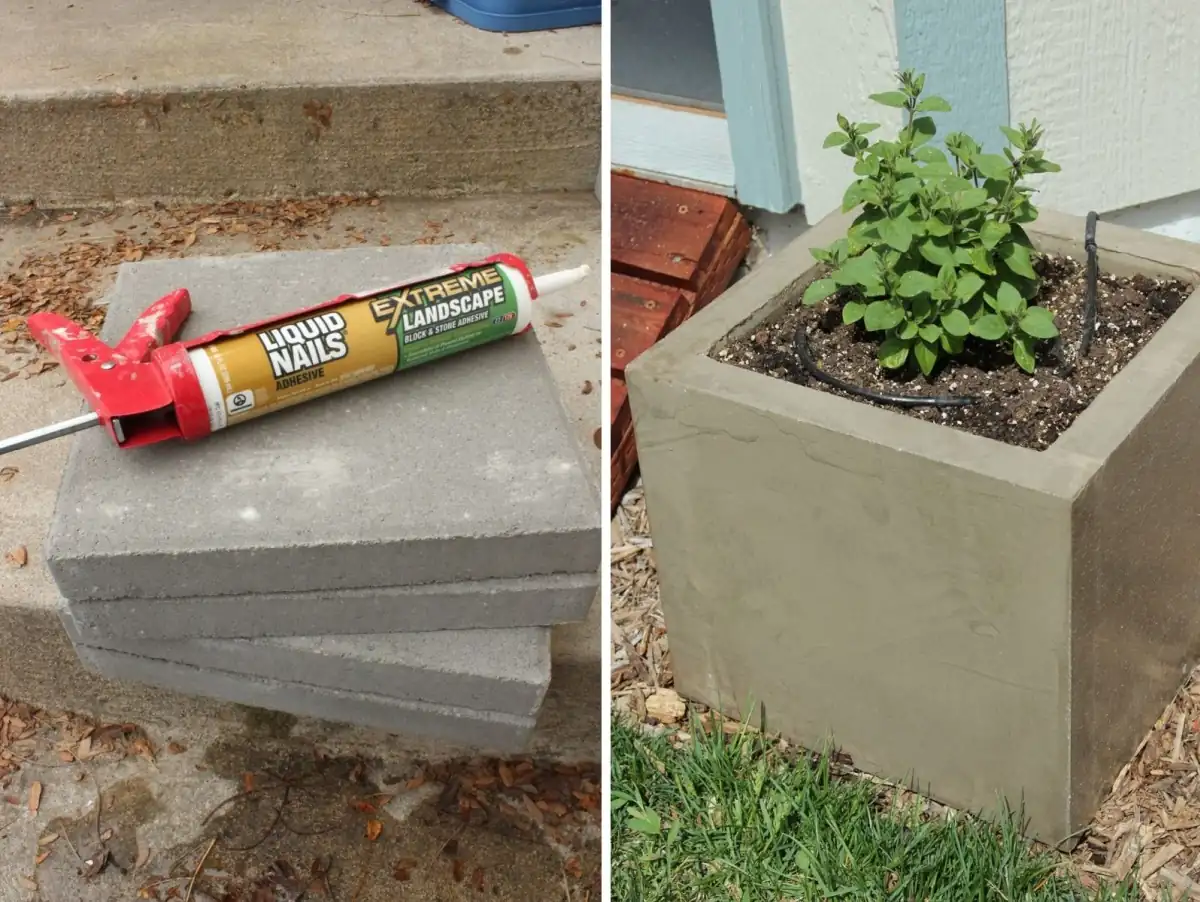
<p>Reuse is usually framed as a way to save money, yet the more interesting results come from changing what an object is for. A paving unit turned upright becomes a planter with weight, texture and a presence that nursery pots cannot match.</p> <p>The project started with four square concrete pavers attached into a hollow cube shape using landscape adhesive alone. But instead of stopping at exposed seams and rough joints, Brittney added a full skim coat of feather finish across the exterior before sealing the entire planter.</p> <p>That extra layer changed the project completely.</p> <p>The planters started with basic square pavers positioned upright and glued edge-to-edge using heavy-duty landscape adhesive.</p> <p>Instead of using forms, screws, or poured concrete, the square structure came together from four vertical pavers pressed into 90-degree corners.</p> <p>Once assembled, the planters already looked functional. But the exposed seams still revealed where each paver connected.</p> <p>The transformation happened after the finishing coat covered those joints.</p> <p>After the adhesive cured, feather finish spread across the entire planter surface.</p>
Landscape Adhesive Held The Entire Structure Together
The Concrete Coating Hid The Paver Seams Completely
That coating filled the cracks, softened the edges, and removed the stacked-paver appearance almost completely. Instead of reading like separate concrete slabs glued together, the planter started looking like one solid poured form.
The feather finish also introduced subtle texture variation across the surface, which helped the planter resemble cast concrete instead of smooth factory-made containers.
Some spreader marks remained visible after drying, which added more industrial character to the final finish.
The Sealer Changed The Surface Again
After sanding and drying, the project added a concrete sealer across the entire planter.
That final layer deepened the color slightly and helped unify the finish across all sides. The sealed surface also gave the planters more protection outdoors against water exposure and changing temperatures.
Without the sealer, the feather finish would have looked more chalky and unfinished over time.
The sealed version looks closer to architectural concrete planters used around patios and entryways.
The Square Shape Changed The Entryway
One of the strongest parts of the project came from the proportions themselves.
The taller square form gave the planters a heavier architectural look beside the small wood ramp and front door. Because the walls stay thick and straight instead of curved, the containers feel more permanent than lightweight plastic or resin planters.
The concrete texture also contrasts against the grass, mulch, and flowers without competing with the landscaping around them.
The Finished Planters Look More Expensive Than The Materials
The biggest surprise is how little the final planters still resemble patio pavers.
Once coated and sealed, the seams disappear into the finish and the structure starts reading like poured concrete containers instead of assembled slabs. The soft texture variation across the sides also prevents the planters from looking too smooth or factory-made.
The final result looks closer to modern landscape planters found outside boutique hotels and contemporary homes than a weekend project built from pavers and adhesive.
I’ll admit, I probably prefer the raw paver version without the feather finish because the exposed seams and rough concrete edges give the planters a stronger industrial look. But the added coating and sealer make more sense outdoors long term since they help protect the joints from moisture and give the surface a cleaner finish.
Would you keep the raw stacked-paver look, or add the concrete coating and sealer like Brittney did?
3 Responses to “These Patio Pavers Turned Into Concrete Planters That Look High-End”
It’s a great idea. I would do the whole process. It looks great.
I would follow the thin set concrete with a dry roller or brush to provide an external textured surface.
I was expecting a much larger planters based on the title instead of 12×12 or what ever they are…. Great spring board for taller and wider planters that I would rather have planking the front door in grandeur!I too would texture it other wise it reminds me of a cinder blocks planter