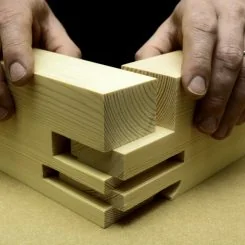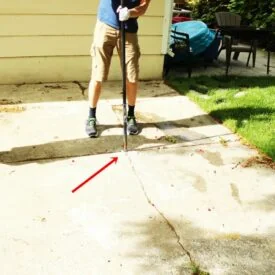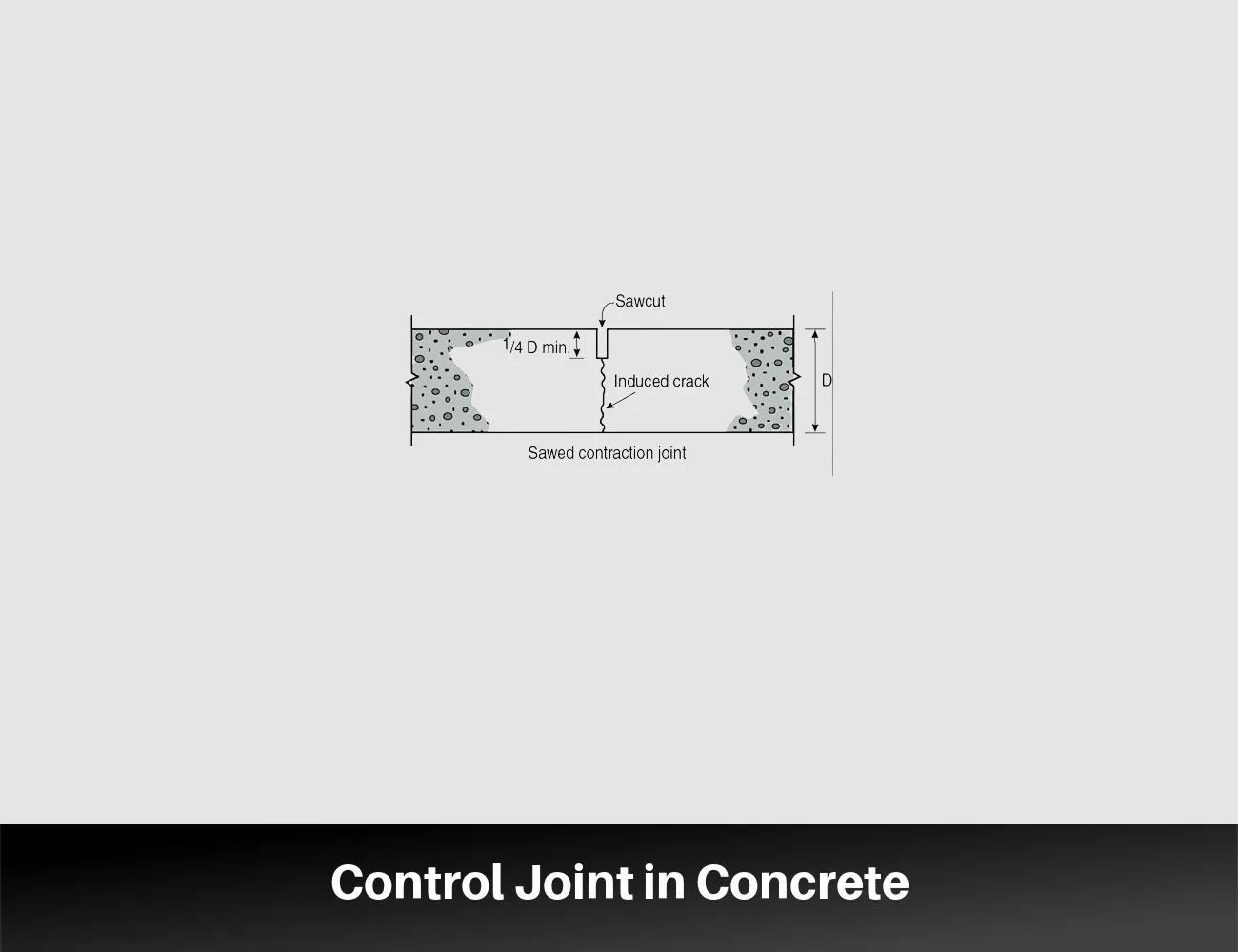
<p>Concrete always cracks, and joints decide where. Placing them deliberately turns an unavoidable behaviour into a controlled one, while skipping them guarantees random results.</p> <p>The creation of control joints, also called contraction joints, is a way that engineers restrain the forces that result from the drying and resulting natural movement in concrete. By using control joints, an engineer can transfer the load across the control joints by the interlocking of aggregates at the crack faces at the joints. Control joints also transfer the load through the use of keyways or dowel bars. Dowel rods are particularly useful on floors that carry heavy loads on a constant basis.</p> <p>Builders create control joints using three methods: saw-cutting, tooling, or using plastic strips.</p> <p>Saw cutting is the most popular and cost-effective way to form control joints. For this method, builders use a specialized saw, fitted with a diamond blade, to create straight intentional cuts in the concrete surface. They must use correct timing for these cuts and ensure that the concrete has reached a sufficient level of hardness so that it does not tear or damage after the cut. Many professionals make trial cuts and observe the results. If the aggregate does not come loose after the cutting, the concrete is ready to be cut. In general, this takes place 6-24 hours after they have poured the concrete.</p>
How Does a Control Joint Control Cracking in Concrete?
Forming Control Joints
Saw Cutting
Tooling
Tooling to create a control joint involves specialized tools to create an indentation in the concrete before ithardens. This is a less efficient and more costly way to form control joints, but it can be utilized on smaller concrete jobs or on jobs that are not suitable or practical for saw cutting.
The tools that builders use for this job are hand groovers, jointers, or trowels designed for making control joints. They apply pressure to the concrete using these tools to make a groove along a specified line creating a groove of specified depth.
Plastic Strips
Builders also use preformed plastic strips to form control joints. After the concrete has reached a sufficient dried state, they place the plastic strips into the concrete according to premarked locations. Once the concrete has cured and hardened, builders can remove the plastic strips which leave a void or gap in the concrete that acts as a control joint.
Factors That Determine the Spacing of Control Joints
Different applications require different control joint spacings. Builders use building code guidelines to help determine the correct spacing for a specific application. Even after they consider these guidelines, there are a number of other factors that influence the placement of control joints.
Standard Control Joint Spacing by Application
Here are some general recommendations for control joint spacing according to specific applications. While these are a good starting place, it is best to consult a professional due to differences in concrete thickness, specific mix, and environmental conditions
Standard Control Joint Spacing by Concrete Thickness, Aggregate Size, and Slump
Here are general suggestions for control joint spacing according to concrete thickness, aggregate size, andconcrete slump. As above, this spacing may vary according to design type and environmental conditions.
Difference Between Control Joint vs Expansion Joint
Control joints and expansion joints are both essential joints that builders use in concrete construction to perform different purposes. Builders create control joints to help minimize cracking due to the shrinkage that happens as the concrete dries.
Expansion joints, also called movement joints, are formed to control the expansion of concrete. Builders allow for the natural movement of concrete by filling the joint with compressible material like foam or rubber which can compress or expand without putting strain on concrete. Expansion joints are particularly useful in large concrete applications where builders expect thermal expansion in the concrete.